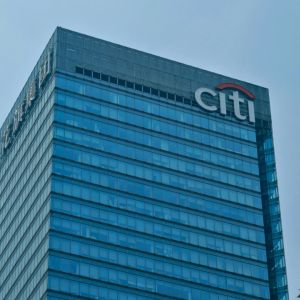
Citigroup has opened its regional headquarters in Riyadh, becoming the latest Wall Street giant to set up shop in Saudi Arabia as competition intensifies for access to the kingdom’s government and its $1 trillion sovereign wealth fund. Citi’s presence is actually another step in the long game of aligning with Saudi’s new economic order. Instead of following rivals into the flashy King Abdullah Financial District, Citi picked Kingdom Tower, one of Riyadh’s most recognizable skyscrapers. The office will direct operations and strategy across the Middle East and North Africa, though the bank declined to reveal staffing numbers. “Establishing a regional headquarters here in Riyadh reflects both our confidence in the kingdom’s momentum and our commitment to being close to the clients driving that change,” said Chief Executive Officer Jane Fraser. Citi joins Wall Street’s race into Riyadh Citi’s opening comes days before Fraser arrives in Riyadh to speak at the Future Investment Initiative (FII), which is better known as “Davos in the Desert,” an annual investor forum that brings together global financial leaders and Saudi’s governing council. Also in attendance will be Jamie Dimon, the CEO of JPMorgan Chase, and David Solomon, the head of Goldman Sachs. Earlier this month, JPMorgan obtained its own regional HQ license, while Morgan Stanley and BlackRock have already secured those kinds of approvals. Saudi regulation state that any foreign company seeking government contracts must have a local headquarters, and that includes access to the powerful Public Investment Fund, which has become a magnet for international banks and investors. US and Saudi’s complicated partnership built on oil and power The US-Saudi relationship began in 1933, formalized through the 1951 Mutual Defense Assistance Agreement.It created a simple exchange: American protection for Saudi oil. Over the decades, the two countries built one of the world’s most durable alliances, despite stark differences between an Islamic absolute monarchy and a secular republic. The partnership deepened after 1945, with Washington providing military support while Riyadh kept oil flowing in dollars. That understanding often required the U.S. to look the other way on issues like Wahhabism, human rights, and state-linked terrorism claims. Cooperation reached its peak after the 1979 Soviet invasion of Afghanistan, when both sides backed anti-Soviet militias. The 1991 Gulf War further solidified military collaboration, as U.S., Saudi, and British troops expelled Iraq from Kuwait. Still, fractures emerged over Israel, the 1973 oil embargo, the Iraq invasion in 2003, and fallout from the September 11 attacks, when most hijackers were Saudi nationals. Tensions resurfaced under Barack Obama, before Donald Trump’s visit to Riyadh in 2017 rekindled political warmth. But the 2018 killing of journalist Jamal Khashoggi at the Saudi consulate in Istanbul reignited outrage. Turkish investigators and U.S. intelligence agencies concluded the murder was ordered by Crown Prince Mohammed bin Salman, drawing sanctions against Saudi officials. Congress tried to halt U.S. arms sales linked to the Yemen war, but Trump’s administration blocked the move, protecting one of Washington’s most lucrative defense partners. Claim your free seat in an exclusive crypto trading community - limited to 1,000 members.